

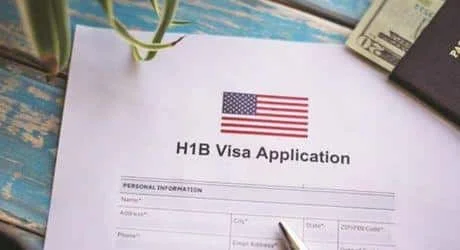
As debates over U.S. immigration policy intensify in the lead-up to the 2024 elections, more and more people on H-1B visas are becoming concerned about their status in the country.
A first and foremost cause of worry for H-1B holders during Trump\’s first term was his rigorous immigration policies, which included strict rules and heightened scrutiny of non-immigrant visas.
Such concerns over immigration with a second Trump administration have many skilled workers and their families pondering long-term plans in the United States.
This article discusses what H-1B holders can expect if history repeats itself with similar policies and why the EB-5 Immigrant Program is fast becoming a viable alternative as a way in.
The Current Reality for H-1B Visa Holders
H-1B visas enable U.S. employers to hire foreign professionals for fields such as technology, engineering, and healthcare. Even though the program does have a very important role in narrowing down the talent gap of the U.S. workforce, there are limitations and vulnerabilities within it.
- Annual Quota Limits:
- The H-1B program is capped at 85,000 visas per year, so it is very competitive.
- Those who get a visa also have to deal with stringent timelines and renewal procedures.
- Employer Dependency:
- H-1B visa holders are restricted to working for their sponsors, therefore their job opportunities are limited.
- If they lose the job, they lose their legal status in the United States, which brings high insecurity to their families.
- Green Card Backlogs:
- Because of per-country limits, many H-1B holders from countries with high demand, such as India, have to wait a long time for green cards.
- These backlogs put families in a limbo, making it impossible for them to become fully integrated into American life.
- Policy Vulnerability:
- Immigration laws and policies can change from administration to administration, but H-1B holders are especially vulnerable to adjustments in enforcement, approvals, and extensions.
How a Second Trump Administration Could Affect H-1B Holders
During his first term, the Trump administration put in place a few measures that have made the H-1B process more restrictive and uncertain, including:
- Increased Scrutiny and Denials:
Approval rates for initial H-1B petitions fell sharply under Trump as scrutiny intensified. Thus there is a remarkable surge in the amount of RFEs as well as an additional burden on candidates and their employers.
- Proposals to Restrict H-1B Eligibility:
The Trump administration also proposed a narrower definition of “specialty occupations,” which could eliminate many positions that had previously qualified for H-1B visas.
- Proposed Wage Rule Changes:
There were efforts to increase the wage floors for H-1B eligibility, which could price out smaller businesses from using the program.
- Suspension of Entry:
In 2020, Trump issued a proclamation to temporarily suspend the entry of new H-1B visa holders because of the COVID-19 pandemic.
Based on these precedents, there is a strong likelihood that such or even more restrictive measures may come back in a second Trump administration, placing H-1B holders at risk.
EB-5: A Viable Alternative for Permanent Residency
For those seeking a more stable path to permanent residence, the EB-5 Immigrant Investor Program is an extremely attractive alternative. The principal differences between the H-1B visa and EB-5 are that EB-5 is not employer-specific, it has no annual cap, and it leads directly to a green card.
Key Features of the EB-5 Program:
- Investment Required:
The investors are needed to invest a minimum amount in a new commercial enterprise of $1,050,000.
Within Targeted Employment Areas (TEA) — specifically rural areas or regions with high unemployment — the minimum is reduced to $800,000.
- Job Creation:
The investment must create (or save) at least 10 equivalent full time jobs for U.S. workers.
- Direct Path to Permanent Residency:
- EB-5 investors and their immediate family members (spouse and unmarried children under 21) receive conditional green cards.
- They have to fulfill program requirements for two years before they can apply for permanent green cards.
- No Sponsorship by Employer Required:
EB-5 investors are not beholden to an employer, and this permits greater freedom in their career decisions.
- Reduced processing time:
Recent reforms and additional resources for EB-5 processing have drastically shortened wait times for many applicants.
Why EB-5 is the right plan for H-1B Holders
For H-1B visa holders, there are some advantages to the EB-5 program:
- Freedom from Employment Constraints:
Unlike the H-1B, the EB-5 allows one to take up any job or even start a business of one\’s own without jeopardizing one\’s immigration status.
- Green Card Backlog Relief
EB-5 applicants from countries of high demand, like India, have to wait much less time as compared to employment-based green cards.
- Stability for Families:
With EB-5, dependents can work and study in the U.S. without requiring separate visas, ensuring greater stability for the whole family.
- No Annual Cap:
EB-5 is not restricted by such annual quotas that the H-1B visa goes through, and that is why it can serve any applicant, as long as he comes up with USD.
Recent Developments in EB-5
The EB-5 program has undergone substantial changes in the past few years to enhance its attractiveness and effectiveness:
- Reauthorization and Reform:
- The EB-5 Regional Center Program was reauthorized in 2022, which provided investors with more predictability.
- Changes included stricter compliance measures to protect investors and improve transparency.
- Priority Processing:
U.S. Citizenship and Immigration Services (USCIS) offers expedited processing to some EB-5 applicants to lower their waiting times.
- Rural Investment Incentives:
Priority processing and visa set-asides are available now for investments in rural TEAs, so these projects become more attractive.
How FRR Immigration Can Help H-1B Holders
Expert guidance is a must for any Indian national on an H-1B visa who wants to explore the EB-5 program. That is where FRR Immigration comes into play. It is a consultancy firm operating from India and is deeply experienced in matters of investment-based immigration.
FRR Immigration delivers:
- Tailor-made Consultation:
Tailored advice to help you find out if the EB-5 program is suitable according to your goals and budget.
- Project Selection:
Guidance in the selection of qualified EB-5 investment projects, meeting all the requirements of the program, which have a very good chance of approval.
- Application Support:
Full service in preparing and filing your EB-5 petition with all documentation compliant with the requirements of USCIS.
- Monitoring and Compliance:
Ongoing support in order to monitor the progress of your investment and to ensure it meets the job creation and other program criteria.
- Transition Support:
Assistance in transitioning to a green card, including advice on permanent residency and U.S. integration.
Through its partnership with FRR Immigration, H-1B holders can now confidently navigate the EB-5 program and ensure a smoother transition to permanent residency.